








Back to all videos
Mastering Decision Making
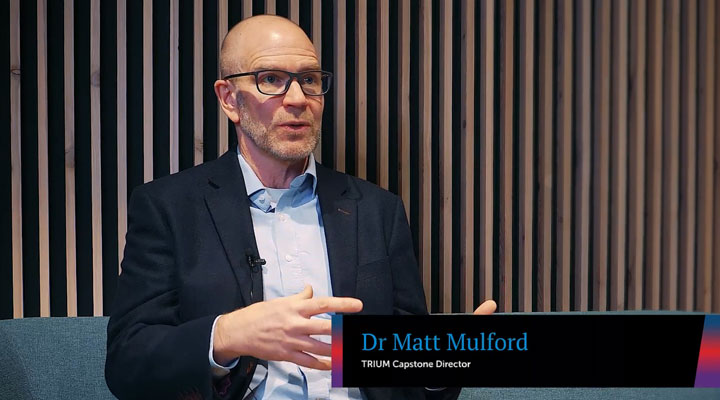
This video explores how TRIUM helps leaders improve their decision making. It explains why even smart, well-prepared executives make predictable errors, and introduces the idea of “decision hygiene” and the leader’s role as a decision architect who designs processes to minimise bias and improve judgment quality.
In this video you’ll learn:
-
Why experienced, intelligent leaders still make predictable decision errors—not from lack of effort, but because of how the mind processes information.
-
What it means to act as a “decision architect” rather than just a decision maker, by designing better decision processes for yourself and your teams.
-
How decision hygiene helps isolate key choices from biases and noise that can distort judgment.
-
Why mastering the decision process explains much of the difference between poor and high-quality decisions in organisations.
Speaker:
Professor Matt Mulford, TRIUM Capstone Director
Full transcript
One of the things we concentrate on in all of the courses across TRIUM is this idea of decision making – so what kind of information goes into your decision making. And it turns out that we we’re really good at making decisions in a lot of different environments, but we have certain predictable errors that we make. And this isn’t because we aren’t smart enough, it isn’t because we don’t do all of our homework. It’s because of the architecture of our mind and the way our mind processes information creates kind of blind spots, kind of judgment Illusions.
And what we talk about is your role as a leader often is not just to make decisions. Your role as a leader is a decision architect and what I mean by that is you have to put the processes in place the decision processes in place in such a way that you minimize your predictable errors. And this idea of decision hygiene: you have to make sure that it’s kind of isolated from potential biases that might creep into your decision process. So the bigger context is a leader doesn’t just make decisions – and that’s kind of the the intuitive naive view that we have about leaders – but effective leaders, they master that decision process, because the decision processes where where the the we can explain most of the variability or a big part of the variability in the quality of the decision.