




Back to all videos
Introducing Module 1: London
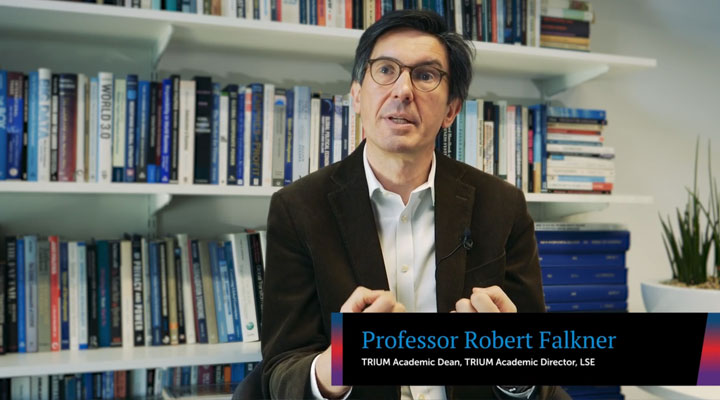
Professor Robert Falkner introduces TRIUM’s first module, focused on the connection between politics, economics and global business. It shows how students explore the political economy of globalisation, finance, trade and investment, and learn to navigate radical uncertainty and geopolitical risk when shaping future business strategy.
In this video you’ll learn:
-
How TRIUM’s first module links politics, economics and business to explain today’s and tomorrow’s global environment.
-
How the political structures and dynamics behind finance, trade and investment shape corporate strategy.
-
How the module helps executives think about radical uncertainty, geopolitical disruption and future sources of conflict.
-
How conceptual and analytical tools equip students to become more critical consumers of international affairs and global business news.
Speaker:
Professor Robert Falkner, TRIUM Academic Dean
Full transcript
The first module is very much focused on understanding the connection between politics and economics and how that shapes the business environment of today and tomorrow. So it’s very much about understanding what drivers of change there will be in future years.
We start with an introduction to the political economy of globalization and entrepreneurship and how the two come together. We then take the students on a journey to look at different sectors of the global economy from finance to trade and investment. We get them to think about how the political structures and political dynamics in these fields play into the business world and we try to get the students to think about radical uncertainty in the global context. What will be the future sources of conflict where will geopolitical disturbance play into the global economy? How do I need to adapt my business strategy to be prepared for often unknown and unforeseen risks that might emerge in future years.
So this is not something you can teach through textbooks. This is something you need to think through collectively in the classroom. We are equipping the students with conceptual tools with analytical perspective so that they can make sense of those connections so that they can come away feeling more empowered to think through global business strategies in that kind of global context.
So this is very much about them becoming more critical consumers of international affairs and international business news.