






Back to all videos
How to be a better consumer of information
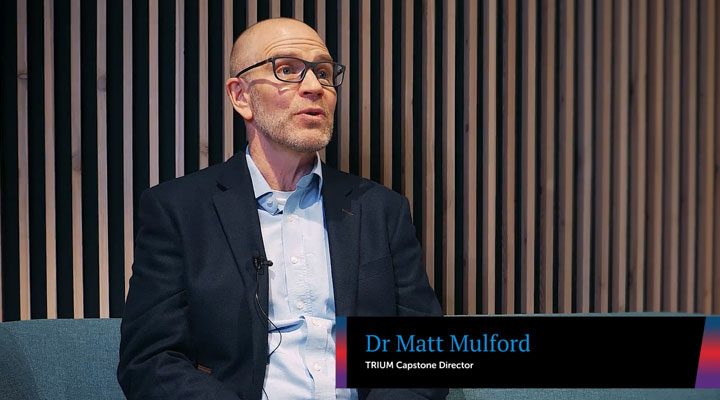
This video introduces TRIUM’s Quantitative Analysis course and explains why it matters for senior leaders. Rather than turning executives into statisticians, it focuses on evidence-based management: giving leaders the tools and confidence to question quantitative work, test their assumptions and become more intelligent, sceptical consumers of data.
In this video you’ll learn:
- Why Quantitative Analysis is taught early in TRIUM to anchor the program in evidence-based management.
- How the course is designed for leaders, not analysts – focusing on consuming and challenging others’ quantitative work rather than doing all the analysis yourself.
- How understanding basic quantitative concepts helps you ask better questions, rebalance power dynamics and avoid being intimidated by numbers.
- Why making your implicit assumptions explicit and testable is critical to preventing strategic blind spots and future crises.
Speaker:
Professor Matt Mulford, TRIUM Capstone Director
Full transcript
One of the courses I teach is a course called Quantitative Analysis.
It’s one of the courses that I know that people joining the program often look at the syllabus and they look what’s coming and they say ‘oh, quantitative analysis’. It’s one of the first courses we do in the first module and they go kind of ‘yikes’.
You know, a lot of people have had bad experiences with quantitative analysis in the past. Sometimes, you know, you took your last Math course or quantitative course and you think ‘thank God I never have to do this again!’ But what we try to do is we try to approach that course not as somebody who’s going to be an analyst and in fact, I would say that this is the approach across all of TRIUM.
TRIUM its best doesn’t teach you how to be a marketer, an analyst etc. It teaches you as a leader what you need to know to consume other people’s work in those areas.
So what I’m trying to do when I teach quantitative methods is a couple things: one is you always are looking at work produced by other people often as a leader.
And you have to know enough about that to ask intelligent questions because otherwise the power dynamic is all wrong, right? If you don’t know anything about the quantitative analysis and you’re consuming quantitative analysis of others often people feel insecure to challenge those things.
So we try to do is give leaders the tools that they need to not only understand but leverage those things in a way that it gives them a confidence to to become better consumers and to be more skeptical consumers of what comes up through the quantitative process.
The other thing is one of the reasons that it’s at the very beginning of the whole program is it gives TRIUM the focus of this idea of evidence-based management.
So we we try to give people the tools – and I think it’s really important and this is why it’s at the beginning – we give people the tools that they need to analyze their own environments. So the idea again is not to make somebody a quantitative analyst is not to make somebody a stats person.
It’s the idea to say, how do we know when we know something? How do I test my ideas and we talk a lot about making our implicit assumptions about the world – the business world in this case – explicit and once you make those explicit, you can test all of your assumptions. You can test your model, you can see whether it’s actually working. Too often we leave those implicit models internalized and in doing so we never test our assumptions and in our experience that’s when companies, individuals, etc really face a kind of crisis because they hadn’t thought about what might be wrong about their assumptions.