






Back to all videos
Geopolitics in Focus #1: Business leadership in the multi-polar world
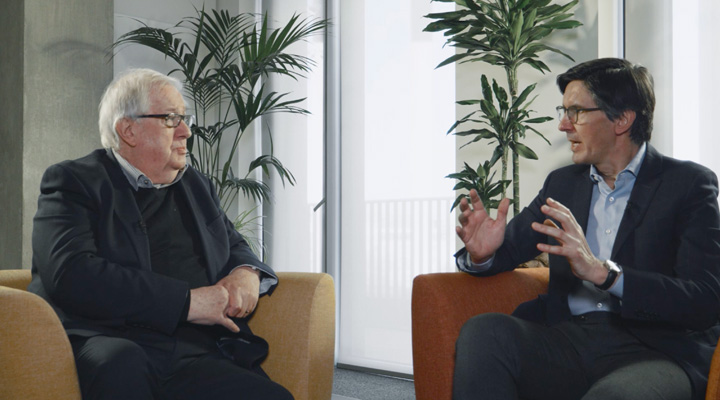
Part 1 of Geopolitics in Focus, a TRIUM faculty conversation, looks at how the international system is moving beyond the post–Cold War era and why that creates growing uncertainty for governments and business leaders. It also examines how populism is reshaping politics and how US–China competition is defined by interdependence, not a simple Cold War replay. The discussion closes with leadership lessons: expect black swans, avoid groupthink, and build resilience by seeking diverse viewpoints.
In this video you’ll learn:
- Multipolarity is the driver of uncertainty: more actors, more agendas, harder forecasts.
- Middle powers matter and won’t reliably “pick a side,” complicating great-power strategy.
- Populism is structural and directly affects markets, alliances, and policy volatility.
- “De-globalization” is real in operations, but the system isn’t simply collapsing, trade and investment remain significant.
- The leadership edge is resilience: expect Black Swans, stay nimble, and defeat groupthink with real viewpoint diversity.
Speaker:
Professor Robert Falkner, TRIUM Academic Dean
Professor Mick Cox, Emeritus Professor of International Relations at LSE
Full transcript
Mick, you’ve been teaching global politics, international conflict, great power politics in the TRIUM classroom now for I think close to two decades. Should we therefore see the international system as one that has evolved from a unipolar system, with the United States at the helm to what many now describe as a bipolar system, perhaps along the lines of a second Cold War with the West pitted against a rising China and a newly aggressive Russia.
And what is, in a sense, makes the world today so uncertain. So unstable is the fact that it is multipolar. You can get some degree of stability with unipolarity. You know, the big guy organizes the rest of the world. You can get stability with bi-polarity, but you can’t get stability in my view with multi-polarity.
And that makes it, you would argue, inherently unstable in a way that perhaps the post-Cold War era was not. Yeah, maybe. Maybe the word uncertainty is a better word maybe, than unstable. I think, you know, I mean, I mean, the best example of what you’re talking about here would be something like India.
You know, India has a long historical tradition of non-alignment. There’s lots of players like India within the Middle East. The Saudis, you know, if you go look at other parts, we’ll take Turkey. You know, take Indonesia. And they all play a role and they want their voice to be heard. I don’t think it makes it necessarily unstable in the sense we’re moving towards World War 3 or anything like that, but it does make calculations by the by the great Powers, if you want to call it, much more difficult to make.
If you’re a business person, should you really be studying a phenomenon called populism from a purely market point of view, leadership, The kind of things you do in business school? No. But you have to. Why? Because populism is reshaping Europe. It’s reshaped the United States. It has influence in countries such as India, and it isn’t going to go away. I mean, what’s happened in the United States under President Trump since he took office and he was there before, tells us that there’s something deeper going on, not only in the United States, what’s going on around the world.
And the reason that Trump has the influence he has isn’t just because the United States is the biggest economy in the world, right? It is also that he has influence in other countries where populism has a deep appeal.
A lot of global business leaders now find themselves exactly caught up in these newly emerging conflict lines, uncertain about which way they should swing if they have to choose.
There’s a lot of talk about de-globalization moments where companies have to perhaps find new structures for their supply chains. That would almost suggest that we are going through perhaps a period of de-globalization, of a kind of a retrenchment of the global economy that poses enormous challenges for business leaders to find a new kind of strategy that they can use to navigate this uncertainty.
I take a rather revisionist you on this, Robert, you won’t be surprised to hear. I think that globalization is going through some turmoil. No doubt about it. But when you get down to it, Robert, I’m not an economist, but I do read the stats, and the stats tell me that actually global trade isn’t collapsing. Global foreign direct investment in the world is not collapsing.
Companies are still global and they can’t be anything other than global if they want to be major companies within the world. So the evidence points in two very different directions, it seems to me. So yeah, we’ve got the geopolitical rivalry. I mean, there’s no doubt about it, you know. But this is what makes the relationship between China and the United States so interesting.
It’s kind of conflictual but interdependent. And that’s not like the old Cold War. The complexity of interdependence of China on the world market and on the United States and the United States on China, means whatever the rivalries are for geopolitical influence or different visions of the world. Nonetheless, they’re locked together. And I think separating themselves from that would be almost impossible.
You have deep experience of our TRIUM communities going back the last 24, 25 years. What is it that these students should take away from our discussion about geopolitical upheaval and the great, deep uncertainty that everyone faces?
My first one is Black Swans. The big events that come along that you didn’t expect, and then change everything because the shocks are coming. You know, they’re flooding in. I mean, we had the shock at the end of the Cold War. We had the shock of 9/11, had the shock of 2008, and was now living through the shock of a war in the middle of Europe and the shock of many other things about it.
So always expect the unexpected. I know it’s easy to say, but I think that is so important, you know, to be nimble, to be quick, and to keep one’s mind open to the possibility that something is coming toward you, that you don’t know if it’s coming. That brings you, then, I think, to how do you do that? You try and build resilience into your decision making and be open to varieties of opinion.
Don’t go into groupthink. Groupthink, I think, is the biggest enemy of being resilient, because people come along with unpopular ideas can be too easily marginalized if everybody around the table looks the same, sounds the same, and talks the same, then you know you’ve got a problem.
So we’re talking about developing a deeper understanding of what’s driving global change in politics, in economics, talking about a diversity of viewpoints.
And we also talking about developing greater resilience in terms of being able to take these shocks, the black swans when they come and you didn’t see them coming.