

Back to Alumni
Class of 2024
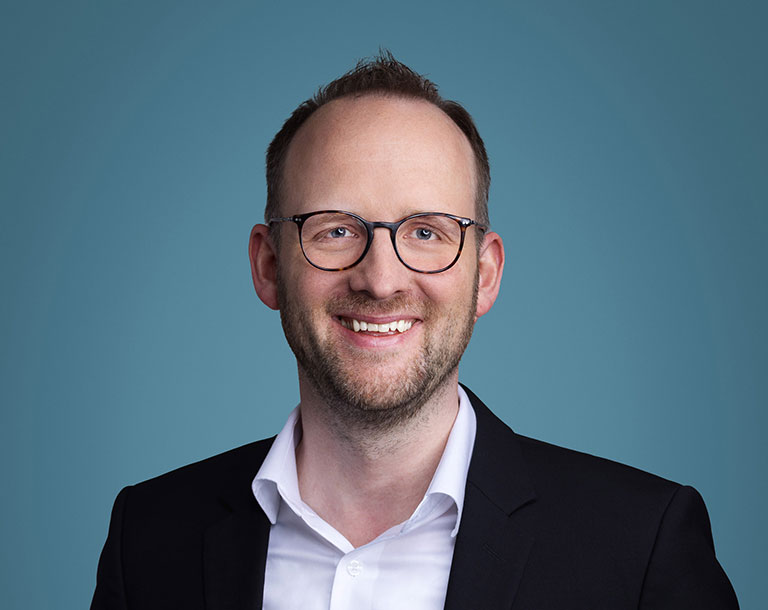
Sönke Steinert
Sönke Steinert (Class of 2024)
Swiss Treasury Partners, Managing Partner and Board Member
ABYOLO, Board Member
“If they’d let me, I’d do it again in a heartbeat. TRIUM is a rare program that changes not just your career, but your perspective — and that’s the best ROI you can ask for.”
With over two decades of international experience in multi-asset trading, treasury leadership, and financial strategy, Sönke Steinert has built a career around what he describes as “turning complexity into clarity.” A former trading desk head for a private equity firm, he has since transitioned into entrepreneurship, with two companies — Swiss Treasury Partners, a financial advisory firm, and ABYOLO, a biotech venture born out of his TRIUM capstone project. Sönke is also the Swiss Chapter Head for TRIUM alumni, promoting global connections and engagement within the network.
He recently caught up with TRIUM to discuss how the program deepened his understanding of global risk and financial systems, the appeal of TRIUM’s structure, academic rigor, and network, and how his Capstone project not only transformed into a real-world entrepreneurship venture but re-centered his sense of purpose.
You’ve led teams across three continents. How did TRIUM deepen your understanding of global risk, geopolitics, and financial systems?
I grew up in East Germany, so geopolitical awareness has always been part of my life. TRIUM gave me a way to contextualize that understanding in a business framework. Additionally, having classmates from all over the world gave me a better sense of how geopolitical events play out across different markets. Even if a particular event doesn’t directly impact you, someone in your cohort is experiencing its ripple effects in real time. These dynamics are sparking conversations where multiple perspectives are on the table, and global risk becomes tangible rather than abstract.
Having worked with teams across three continents, I’ve seen how interconnected financial systems are, while still operating in distinct cultural and regulatory environments. What I appreciated at TRIUM — primarily through the valuation classes — was the hands-on opportunity to build models from scratch and revisit the fundamentals. It reminded me that no matter how complex the system or how uncertain the geopolitical environment, the fundamentals remain the anchor.
TRIUM emphasizes resilience and innovation. How have you applied those concepts since graduation?
TRIUM has been a catalyst for me. The program provided strong frameworks to apply daily. From the start in London, we were focusing on evidence-based management, questioning assumptions, and grounding decisions in facts. That stayed with me. In finance, and really in any industry, it’s easy to get swept up in hype cycles. TRIUM trained me to look behind the curtain and stay disciplined during decision-making.
About three months into the program, I decided to leave my job — partly because of family priorities and partly because I felt ready to take a new step. I had founded companies very early in my career, and TRIUM helped me reconnect with that entrepreneurial mindset in a structured way. It gave me a clear North Star and pushed me to reflect on where I can create the most value and identify what really drives me. That combination of reflection and action is how I’ve applied resilience and innovation.
Can you tell us more about the Capstone?
The Capstone is like a start-up incubator. It’s an environment where you work in highly diverse teams on business ideas. I didn’t enter the Capstone with a specific concept in mind and the idea for the capstone emerged during the program. Suddenly, I found myself in a biotech context, without any industry background.
That experience quickly showed me the importance and power of skill diversity. The team members were complementing each other. I took the responsibility for financial planning as my core contribution, while relying heavily on others’ technical, scientific, and marketing expertise.
The Capstone also helped to re-center my sense of purpose and sharpen my inner compass. Helping pension capital to achieve higher returns is important, investors benefit from that. But contributing to solutions that help people survive diseases operates at a different magnitude. What Capstone made clear to me is that these two worlds, financial rigor and meaningful impact, do not have to be in conflict. They can, in fact, reinforce one another.
How would you describe the TRIUM network and its value to you now?
The TRIUM network is unlike anything else I’ve experienced. It’s not just about titles or contacts, it’s a genuine circle of trust, in which you can speak openly with people from all over the world.
That global network is unique. For example, we recently hosted a weekend event in Switzerland, and people flew in from across the world to take part, which really boosts the sense of community. On a more practical level, when I recently explored an additional venture, I reached out to someone in the network, and they were immediately available, giving me 90 minutes of their time. That level of openness and commitment really stands out.
How do you see the role of a finance leader evolving?
The role of a finance leader has evolved significantly in recent years. Finance leaders are now architects and drivers of long-term strategy as they must move beyond managing numbers to drive long-term value creation, balancing resilience, innovation, and responsible capital allocation. Changing global dynamics, new technologies such as AI, machine learning, blockchain but also the question of purpose are transforming how organizations operate and make decisions And all that in an environment of ever increasing complexity with rising geopolitical tensions market volatility and more uncertainty.
How did TRIUM shape your post-graduation trajectory?
TRIUM fundamentally rewrote the path I have seen for myself. It helped me step outside the trajectory I was on. The program renewed my entrepreneurial mindset and enhanced key leadership qualities. It increased the level of confidence, perspective, and making decisions in uncertain situations. As someone with a family, leaving a stable corporate role was not an easy choice. TRIUM gave me the clarity and conviction to take that step, to commit fully and move forward with confidence.
How would you describe TRIUM graduates? What do they bring to the table?
TRIUM graduates share a truly global mindset and a long-term perspective. Even when they disagree, they step outside siloed thinking and engage openly with other viewpoints. There’s a genuine willingness to learn from different perspectives rather than defend fixed positions.
What also differentiates TRIUM graduates is a strong desire to create something meaningful, not just successful. Because many graduates are already advanced in their careers, conversations are more thoughtful, more experience-based, and ultimately more impactful.
Three words to describe your TRIUM experience?
Amazing. Unique. Great.