

Back to Alumni
Class of 2027
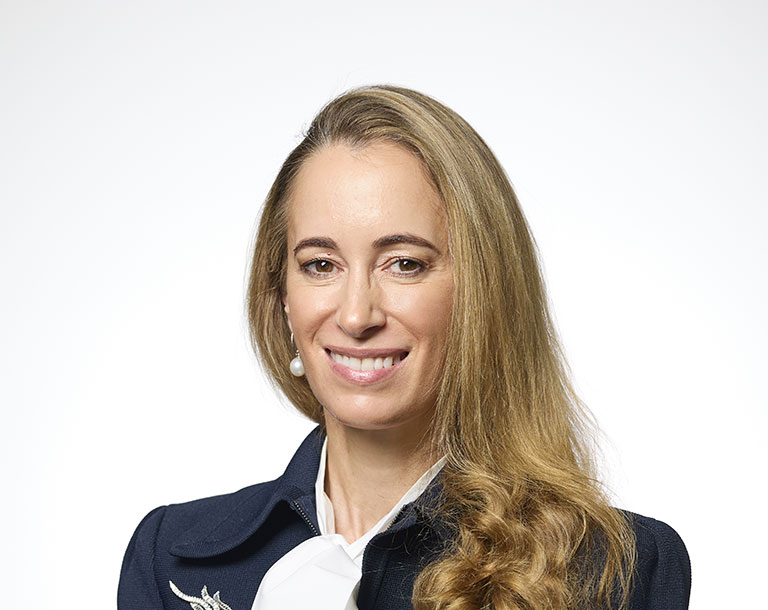
Pretar Harris
Pretar Harris (Class of 2027)
Chief Investment Officer at Housing Australia
Last week we spoke to TRIUM Class of 2027 student Pretar Harris. Coming up to half way through the program, Pretar reflected on how TRIUM has already changed her perspective and approach and forged lifelong connections.
‘A standout academic realisation has been that geopolitics is not a backdrop to strategy; it is part of strategy. The discussions around deglobalisation, shifting power centres and the pressures on the global system made that very tangible. Just as valuable has been hearing how leaders from different sectors and geographies interpret the same global shock in very different ways. That kind of perspective is hard to replicate in ordinary executive life.’
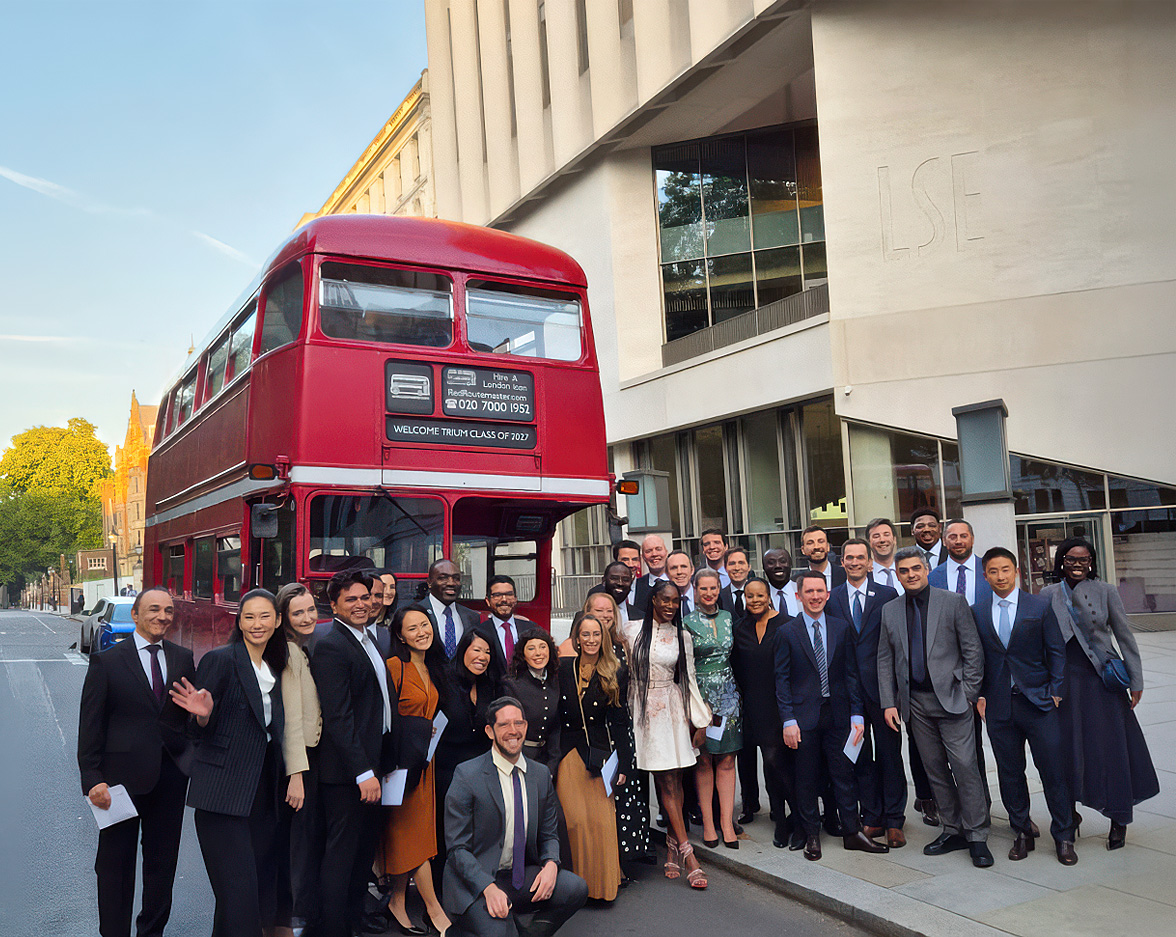
‘…Arriving in New York for the second module and realising just how much I had missed everyone since London. We are an incredibly diverse group of individuals, with very different professional and personal backgrounds, As I stand today, I simply cannot imagine my life without these amazing individuals in it. We are in constant contact every single day.’
Pretar Harris is Chief Investment Officer at Housing Australia and a participant in the TRIUM Global Executive MBA. She is a seasoned real estate and investment executive with over 25 years of experience across Australia, the US, Europe, the Middle East and Asia, with expertise spanning development management, investment, portfolio management, asset and fund management, and project financing. Prior to joining Housing Australia, Pretar has held senior roles with top-tier Global institutions including Brookfield Asset Management, Goldman Sachs, Lendlease, and the UAE Government . She holds a BA, is a graduate of the Australian Institute of Company Directors and the Chief Executive Women Leaders Program and serves on the Board of the Property Industry Foundation, supporting initiatives to address youth homelessness. She is deeply committed to improving housing outcomes for Australians and to mobilising institutional capital in support of social and affordable housing.
On joining the program, you stated that one of your main objectives was to develop your strategic vision. Coming up to halfway through the program, how is this going?
It is going very well, and in a much more practical way than I expected. One of the things I wanted from TRIUM was the ability to step back from individual transactions and think more clearly at the level of systems, incentives and long-term strategic positioning. The program has challenged me to think more explicitly about how deglobalisation, political risk and shifting power dynamics shape business, while also strengthening the financial and analytical side of strategic decision-making.
What that has done for me is connect the macro and the micro much more effectively. In my world, particularly in housing, success is not just about identifying a good opportunity. It is about understanding the policy environment, the capital stack, the stakeholder map and the conditions required to scale. TRIUM is helping me build that broader strategic lens with much greater discipline, and that has already had a direct impact on how I approach both leadership and decision-making.
Following on from a very successful career in real estate investment and business development, you took on the role of Chief Investment Officer for Housing Australia, a pivotal governmental role. How have TRIUM insights and learning supported your transition into this role?
TRIUM has been especially valuable because my move into Housing Australia as a government Special Investment Vehicle, sits right at the intersection of public mandate and private market disciplines. In private markets, you are often optimising for risk-adjusted return. In a public institution, you are also thinking about national outcomes, policy intent, execution capacity, governance and public trust.
The program has given me a very useful framework for that shift. It has helped me ask better questions about incentives, timing, risk-sharing and scalability. In practice, that means thinking not only about whether capital can be deployed, but how to structure products and partnerships so they can crowd in long-term capital while still delivering genuine housing outcomes.
That has been particularly important as we work to increase the scale and effectiveness of our impact. For me, TRIUM has been immediately relevant rather than theoretical, helping me navigate a role where commercial rigour and public purpose have to work hand in hand.
You mentioned that you are an avid follower of geopolitical dynamics. What new insights has TRIUM given you about multilateralism in the current climate?
TRIUM has sharpened my view that multilateralism is not disappearing, but it is becoming more fragmented, more interest-led and more issue-specific. Coming from a career that has taken me through global capital markets and multiple regions, I already had a strong appreciation for geopolitical risk. What TRIUM has added is a more nuanced understanding of how a multipolar world is changing the way cooperation actually happens.
The old assumption that broad-based cooperation will naturally deepen feels much less reliable today. What I see instead is more selective cooperation, with coalitions forming around particular issues, regions or strategic interests. This is particularly relevant given the current conflict in the Middle East and what that means for oil. That does not make multilateralism less important. If anything, it makes understanding it more important, because leaders now have to operate in a world where rules, alliances and institutions still matter, but in a less linear and less predictable way.
In what ways do you see contemporary geopolitical changes influencing the effectiveness and relevance of international institutions and multilateral cooperation from your perspective?
From my perspective, contemporary geopolitical change is testing international institutions and forcing them to adapt. They remain highly relevant because cross-border capital, migration, energy, security and supply chains cannot be managed through domestic policy alone. At the same time, their effectiveness is being challenged by slower consensus-building, competing blocs, rising domestic political pressures and, increasingly, the weaponisation of finance and trade.
One of TRIUM’s most useful contributions is that it pushes you to look beyond the headlines and ask what these shifts mean for real decision-making. For leaders, that means placing greater emphasis on resilience, scenario planning and diversified relationships, rather than assuming stable convergence. Institutions still provide standards, confidence and coordination, but they need to become more responsive to a world that is more contested than the one many of us built our careers in.
How can global capital markets be better engaged to support Australia’s social and affordable housing ambitions, based on your work across Australia, Asia, the Middle East, Europe and the US?
For me, the core point is this: capital is not scarce; investable structures are. Across the markets I have worked in, global capital tends to engage when three things are present: policy certainty, repeatable delivery platforms and a credible risk-adjusted return profile.
For Australia’s social and affordable housing ambitions, that means building a clearer long-term pipeline, improving standardisation of structures, partnering closely with experienced community housing providers, and using public balance sheets strategically to de-risk early phases or crowd in institutional capital. It also means treating the sector less as a one-off policy response and more as an emerging asset class.
My experience has been that international investors are very willing to back public-purpose strategies when the governance is strong, the execution partners are credible, and the pathway to scale is clear. In that sense, the opportunity for Australia is not just to attract capital, but to build confidence.
Since you started the program how have you reflected on your growth as a leader, having attended modules with your cohort of senior international business people?
One of the most valuable aspects of TRIUM has been the mirror it holds up to you when you are surrounded by highly accomplished leaders from different sectors and geographies. It has made me reflect more carefully on where my strengths genuinely help me and where, if overused, they can become constraints. I know that some of my strengths are energy, resilience, empathy and the ability to bring people together. Recent assessment and coaching work has also reinforced that I need to keep growing in delegation, accountability and being more direct in feedback — in other words, continuing the shift from being the player on the field to being the coach.
That has been especially relevant in my first eight months at Housing Australia, where I have led a significant business transformation. We have restructured the organisation to improve client experience, respond to increased funding volumes and ultimately enable greater impact for some of the most vulnerable people in our society. Many of the leadership sessions in TRIUM have helped me navigate that process more effectively, particularly in leading change, communicating clearly through uncertainty and aligning people around a common purpose. What I appreciate about TRIUM is that leadership is not treated as an abstract concept. It is approached through formal frameworks, peer learning and one-to-one coaching, which makes the growth very practical and immediately applicable,
Stand out moment of your program experience so far and what are you looking forward to most about Module 3 in Paris?
A standout moment for me was actually arriving in New York for the second module and realising just how much I had missed everyone since London. We are an incredibly diverse group of individuals, with very different professional and personal backgrounds, but we have become a very close cohort in a short space of time. That has been one of the most rewarding parts of the program for me, and I have already formed life-long friendships. As I stand today, I simply cannot imagine my life without these amazing individuals in it. We are in constant contact every single day.
A standout academic realisation has been that geopolitics is not a backdrop to strategy; it is part of strategy. The discussions around deglobalisation, shifting power centres and the pressures on the global system made that very tangible. Just as valuable has been hearing how leaders from different sectors and geographies interpret the same global shock in very different ways. That kind of perspective is hard to replicate in ordinary executive life.
Looking ahead to Module 3 in Paris, I am especially excited by the focus on marketing and corporate strategy. Coming from an investment background, I find it particularly interesting that TRIUM frames marketing not narrowly as promotion, but as a broader, customer-centric strategic discipline. In my world, whether in private investment or public-purpose finance, building trust, clarity of positioning and alignment across stakeholders matters enormously. And, of course, apart from the amazing location, food and wine, I am also really looking forward to learning more about Kering. Gucci has long been one of my favourite guilty indulgences, so the opportunity to better understand the thinking behind such an iconic luxury brand is especially exciting.