




Back to all videos
Introducing Module 3: Paris
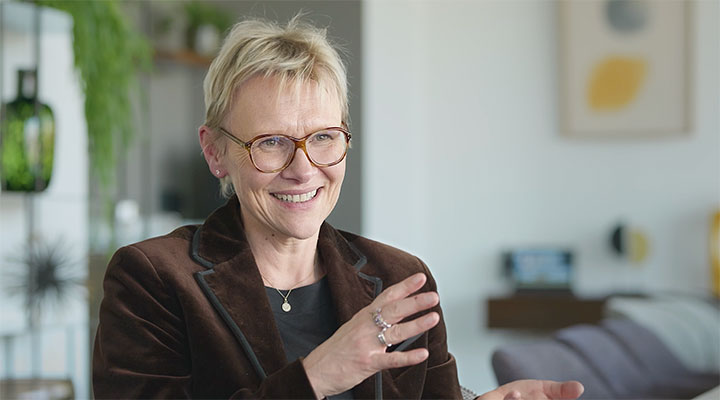
Professor Laurence Lehmann-Ortega, Academic Director for the HEC Paris modules, introduces TRIUM’s Module 3 in Paris. She explains how the module deep-dives into operations, supply chain, marketing and corporate strategy while challenging executives to innovate their business models and explore Paris’s entrepreneurial and luxury ecosystems.
In this video you’ll learn:
-
How Module 3 in Paris builds on the first half of the program with deeper focus on operations, supply chain management, marketing and corporate strategy.
-
Why the goal isn’t to turn executives into functional specialists, but to help them challenge their marketing and operations leaders with sharper, strategy-led questions.
-
How sessions on strategic and business model innovation encourage executives to question what made them successful today in order to stay future-fit and avoid being disrupted.
-
How company visits – including Station F and a leading luxury business – immerse students in Paris’s start-up and luxury ecosystems.
Speaker:
Professor Laurence Lehmann-Ortega, TRIUM Academic Director, HEC
Full transcript
I’m Laurence Lehmann-Ortega, I’m a Professor of Strategy at HEC Paris, and I’m also the Academic Director for the HEC modules in TRIUM. So I’m very happy to be in charge of Module 3 when the students get to Paris, because it’s half way through the program. That’s the perfect time to come in with more specialised parts of the program.
The first week is dedicated to operations and supply-chain management, and then to marketing. So we deep-dive into those topics, but again at a level as everything we teach in TRIUM, we’re not going to turn our students into marketeers, the idea is that as CEOs, as executives, they are able to challenge their marketing managers, asking them the right questions to implement the strategy they have designed for them.
And the second week is about strategy, so more specifically corporate strategy, strategic innovation, mergers and acquisitions, so a more strategic set of questions.
I run a session on strategic innovation that is business model innovation, of course when you want to go for this type of innovation you need to completely challenge the conventional way you think about your industry, the dominant logic in an industry. What I hope students get out of my session is to understand that they both
need to run or improve the profitability and the way they run their company today – because this is what brings you the profitability and performance that you have today – but at the same time, because of the changing environment, they need to think about tomorrow, their next business model, and maybe to disrupt themselves before someone else is doing it. If they want to think creatively, if they want to come up with an innovative strategy, they need to question what has made them successful so far, and so what I think they get out of the sessions about business model innovation is this idea that, yes I’m successful today, yes my organisation is successful today, but if I want to be future-fit then I also need to challenge what I’m doing right now.
When we are in Paris during Module 3 we also like to take students to companies and one visit we do is going out to Station F, which is one of the biggest incubators in Europe. Station F is a place where all the entrepreneurship ecosystem meets and so we see start-ups, we see venture capitalists, we see all the people who have an active role in entrepreneurship.
The other visit that we do is of course something very emblematic of the city of Paris which is luxury business, we go and understand the specificities of this industry that is very well known in France.