




Back to all videos
The LSE Factor
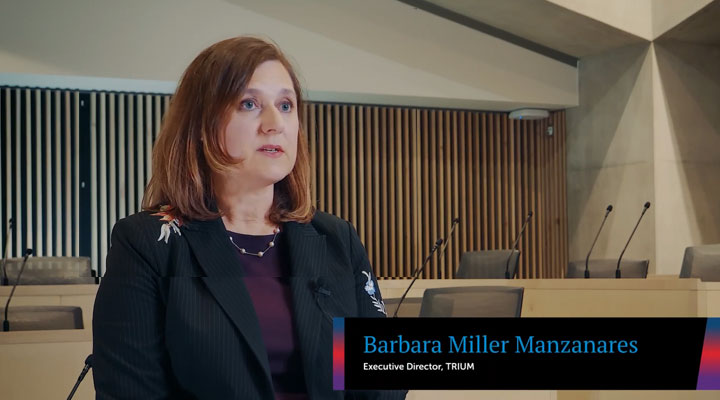
This video explains the “LSE factor” that makes TRIUM distinctive. The LSE, as a leading social science university rather than a business school, brings geopolitical, socio-economic and international relations perspectives into the curriculum, helping TRIUM students anticipate global challenges and take a more proactive, strategic approach to decision-making.
In this video you’ll learn:
-
What the “LSE factor” is and why partnering with a leading social science university makes TRIUM different from traditional business-school-only EMBAs.
-
How social science disciplines like international relations, political science, economics and development are woven into the TRIUM curriculum.
-
How geopolitical and socio-economic forces shape business, and why understanding them is critical for global strategy.
-
How TRIUM helps executives move from reacting to events to anticipating them, taking a more proactive, informed stance in their decision-making.
Speakers:
Barbara Miller-Manzanares, TRIUM Executive Director
Professor Robert Falkner, TRIUM Academic Dean
Full transcript
So one of the real differentiators for TRIUM is what we call the LSE factor.
The LSE is somewhat different to our other two partners – HEC and NYU – in that we’re not a business school, we are a social science university. We’re one of the world’s leading social science universities.
It really brings a different perspective to the business learning because we’re looking at the geopolitical and socio-economic factors that have a real impact on how business is done.
We approach questions of business, business strategy and global politics from a social scientific perspective. So this could be international relations, this could be political science.
We have economists who think about the world and world economy, we have international development experts, and so in TRIUM we bring together this different disciplinary perspectives, and we apply them to the business strategy debate that’s very much at the core of the TRIUM curriculum.
So our students are not just able to respond to issues, they’re actually in a position to get ahead of those issues, that they can anticipate challenges and they can take a more pro-active stance in their decision making.